
Изделия из фиброгипса, Технология G.R.G. (Glass Reinforced Gypsium), GRFG glass reinforced fiber gypsium, применяется в строительстве почти сто лет. Истоки технологии в Англии, а первые широкие эксперименты сделаны в США, концепция нового материала армированного стеклянной фиброй гипса, то есть массы изделия состоящего из гипса, армированного фибро-стекло-волокном, который сейчас известен как стеклофиброгипс.
В последние годы фиброгипс набирает популярность среди мировых дизайнеров и архитекторов. Наши поставщики, являясь одним из лидеров рынка по производству лепного декора, также владеют стекло фибро гипсовой технологией. При изготовлении декора из фиброгипса используем высокотехнологичный голландский, японский, турецкий и немецкий альфа-гипс Hartformgips и бельгийский стекломат Unifilo. портфолио. Интерьеры. Портфолио. Фиброгипс в интерьере Преимущества технологии G.R.G.:Легкость получаемых элементов декора (толщина готового изделия от 2мм до 10мм);Превосходная огнестойкость;Отсутствие ограничений и свобода фантазии в дизайне; Производство конструкций больших размеров (до 19 кв.м.);Простота установки. Изделия из фиброгипса более легкие по сравнению с традиционным гипсовым декором, что существенно упрощает процесс монтажа. Технология G.R.G. позволяет выполнять декор любой сложности (колонны, кессоны, карнизы скрытого освещения, декоративные панно, молдинги и т.д.). Заказ - индивидуальный просчет проекта в фиброгипсе info@321-art.ru/ Glass Fibre Reinforced gypsum GFRC, The Possibility of building a house in just two weeks may seem like a joke to many. And those who intend to laugh it off should know that it is true and practicable. We are talking about walls built using GFRG panels, otherwise known as Glass Fibre Reinforced Gypsum Panels, manufactured by a Cochin based organization, FACT. These panels which are made using substances like gypsum and glass fibre is manufactured at their factory located at Ambalamukal. They are technologically backed up by the Australian Company, Rapid Building Systems. GFRGs are the pre-fabricated load bearing panels used for the construction of walls at a rapid rate. These panels can be sliced and resized to suit your needs and they simply need to be fitted on the foundation using a crane. Everything from walls to ceilings can be built in this manner. A concrete belt is made on the foundation on which rods are later erected. The panels are then fixed onto the base. They need to be given support till they are completely fixed. It is through the small vacuum space inside the panels that the rods from the foundation go by. This space is later concreted to strengthen it further. The doors and windows can be cut out in precise shapes and sizes. Concrete lintels are made inside these panels within which the doors and windows can be later placed. A layer is fitted on the roof before the panels are arranged and fixed on top of them. A thin layer is concrete is then applied over the panels from where the next storey can be built. Qualities, The panels are manufactured in sizes of 12 * 13 metres, weigh 1.6 metric tonnes and are 5 inches thick. (Concrete panels of the same sizes would probably weigh 10 metric tonnes and would be 9 inches thick.) The less thick walls give the rooms a wider carpet area. These materials are eco-friendly and hence are resistant to moisture, corrosion other damages and also reduces the heat inside the house. They can bear as much weight as bricks or similar materials can. Since the panels come in white colour and with a smooth texture on the surface, they do not require plastering or painting. Nevertheless, you can paint them if you wish to. Further, just like the other walls one can fix nails, and screws on them and also do interior designing work on them if required. Since there is a free space inside the walls, the electrical and wiring works can be done through them with better ease. The guidance of an architect is needed right from the beginning of the construction. How to buy, Provide an engineering sketch with all the windows, doors etc. marked precisely and the panels are available in the mentioned sizes, cut using a computer control device. If required, they can again be cut using electric cutters. Once the measurements are given, the panels can be obtained in two or three days. They will be loaded on to our vehicles too. Price, The price charged for the panels is 1000 rupees per square metre. A 12× 3 metre sized panel costs 36000 rupees. 10 such panels would be more than enough for the roof and walls of a house with a plinth area of 1000 square feet. You can imagine how much it would cost to build a similar house in the normal manner. Using panels would minimize your expense to mere 4 Lakhs. The total expense for the construction of houses in this manner can be reduced to half of that of normal houses. If you still doubt its efficiency, you should visit the double storey building of campus and several houses at city. The finishing and quality of those buildings which is as perfect as that of normal brick houses would definitely leave you awed. Worldwide recognition, The panel made houses, whose construction began in Australia in the 90’s has many recognized qualities to its credit. Several countries worldwide have adapted this method for the construction of houses. Madras IIT is the first place in India where its quality was tested and confirmed. It should be noted that this construction material can be reliably used even at earthquake prone zones.
 Скамейка из стеклофибробетона |  Скамейка из стеклофибробетона |  Скамейка из стеклофибробетона |  Скамейка из стеклофибробетона | 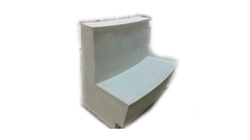 Скамейка из стеклофибробетона |  Скамейка из стеклофибробетона |
|---|